
The Curiosity Thread
of Original Learning

Curiosity is not an add-on to learning - it is the biological and relational foundation of it. When we look through the lenses of neuroscience, psychology, play theory, pedagogy, and playwork, a coherent picture emerges - children are primed to learn through exploratory engagement with the world, and adults either protect that process or interrupt it. The Original Learning Approach rests on this understanding. It recognises that learning is not manufactured through delivery, but grows from within when the right conditions are present and that educating is both an art and science of cultivating those conditions so that what we deliver in our teaching can be processed.
At a neurological level, curiosity is a distinct learning state. When a child becomes curious, dopamine increases - not as simple pleasure, but as a seeking “energy”. The brain shifts into anticipation. Attention sharpens. The hippocampus becomes more active, strengthening memory formation. Curiosity literally primes the brain for learning. Research shows that when we are curious, we retain information more deeply - even material that is only indirectly related to the original question. In this way, curiosity does not merely accompany learning; it prepares and amplifies it. This is why within education we talk about learning being meaningful and relevant - because if it is not, then learning becomes harder without curiosity, It is why I advocate for being play-responsive as educators, because we tap into children’s natural curiosities.
Curiosity, however, is inseparable from uncertainty. It arises when there is a gap between what we know and what we want to know. That gap can be destabilising. Learning, after all, is change - and change is a state of vulnerability. To learn is to revise mental models, to let go of certainty, to tolerate not knowing. For some children, uncertainty feels exciting. For others, it can feel threatening (for adults too). The same knowledge gap can produce wonder in one child and anxiety in another. The difference often lies not in ability, but in environment: relational safety, perceived competence, and autonomy.
Psychologically, this aligns with Self-Determination Theory, articulated by Edward Deci and Richard Ryan. Intrinsic motivation flourishes when three needs are met: autonomy, competence, and relatedness. Curiosity sits precisely at the intersection of these needs. A child leans into uncertainty when they feel safe in relationship, capable of bridging the gap, and free to explore. Without these conditions, uncertainty tips into stress, and curiosity contracts. Play also occurs at this same intersection.
It can be helpful to distinguish between perceptual and epistemic curiosity. Perceptual curiosity is triggered by novelty or surprise - a loud noise, a strange texture, an unexpected outcome. It is sensory, immediate, and often short-lived. Perceptual curiosity is externally triggered but intrinsically energised. The resolution (looking, touching, investigating) is self-driven - unless someone interferes.
Epistemic curiosity, by contrast, is the deeper desire to understand. Epistemic curiosity involves recognising a knowledge gap: “I don’t understand this.” That recognition requires metacognition. This makes epistemic curiosity more closely aligned with intrinsic motivation — especially in the Self-Determination Theory sense (Deci & Ryan).
Epistemic curiosity asks not only “What is that?” but “Why does that happen?” and “How does this work?” In young children, perceptual curiosity often sparks epistemic curiosity. A block falls (perceptual surprise), and the child begins experimenting with gravity (epistemic inquiry). Play provides the bridge between the two. It transforms momentary surprise into sustained investigation. The surprise though, can be pleasant, thrilling, scary etc
Play theory reinforces this understanding. Developmental thinkers such as Jean Piaget and Lev Vygotsky described play as the engine of cognitive development. Through play, children assimilate and accommodate new information, test cause and effect, rehearse social roles, and stretch into their zone of proximal development. Play creates optimal uncertainty - enough novelty to activate perceptual curiosity, enough safety to allow epistemic curiosity to deepen. It is in play that children willingly enter vulnerable states of not knowing, because the relational and emotional context feels secure.
Curiosity requires three things awareness of a gap, belief the gap is bridgeable and a desire to close it. If an external authority says: “You don’t know this — learn it.” That may activate compliance, anxiety and performance orientation, but not necessarily curiosity. In fact, external pressure can suppress curiosity if the task feels evaluative, the gap feels too large and if autonomy is low. This aligns with Self-Determination Theory - autonomy transforms external demands into internal motivation.
So to recap - Perceptual curiosity is typically triggered by external stimuli but is internally energized and resolved. Epistemic curiosity requires internal ownership of a knowledge gap - it cannot be produced by external demand alone, even if the gap itself is externally introduced.
This is where the ten essential threads within the Original Learning Approach become so significant. Rhythm provides predictability, lowering stress so uncertainty feels manageable. Relationship builds trust, so vulnerability is shared rather than isolating. Observation allows adults to notice when curiosity is emerging - or when anxiety is taking over. Autonomy ensures that exploration is self-directed rather than imposed. Reflection helps children integrate new understanding, consolidating the change that learning requires. Each thread functions as a stabilising force around the inherently destabilising act of learning - because they are transforming teaching into something more play-like.
Playwork theory deepens this perspective. Influenced by practitioners such as Bob Hughes, playwork recognises that play is a biological necessity and that adults must be careful not to close down exploratory processes prematurely. One of the most subtle skills of a playworker is the capacity to tolerate uncertainty alongside the child. When adults rush to explain, correct, or conclude, they collapse the knowledge gap too quickly. They remove the productive tension that fuels curiosity. But when they hold space - when they allow repetition, risk, and experimentation - they are protecting the child’s right to move through uncertainty at their own pace.
Within the Original Learning Approach, the educator moves fluidly between three roles: teacher, facilitator, and playworker. As teacher, the adult introduces provocations (aka carefully designed knowledge gaps) that ignite curiosity. As facilitator, the adult scaffolds inquiry, ensuring that the gap remains bridgeable rather than overwhelming - this I think is a vital part of the work - both designing teaching for a gap that is bridgeable and then scaffolding when we notice that despite efforts to design for a suitable gap and small mistake making, there is a risk of children of feeling overwhelmed and losing their power of curiosity. As playworker, the adult safeguards the process, resisting unnecessary intervention and honouring the child’s agenda. In all three roles, the adult is regulating uncertainty - amplifying it enough to spark learning, containing it enough to prevent anxiety.
To centre curiosity, then, is not to create constant excitement. It is to skillfully manage vulnerability. It is to recognise that learning changes us, and that change requires emotional safety. It is to understand that perceptual curiosity may open the door, but epistemic curiosity sustains the journey. It is to see that the brain is primed for learning when interest is alive, and that interest is alive when uncertainty feels invitational rather than threatening.
Curiosity does not need to be installed in children. It is already there, woven into their neurobiology and their play. What they need are environments that honour that priming - rhythmic, relational, responsive spaces where uncertainty is held with care. In becoming play responsive, educators align neuroscience, psychology, and pedagogy into a coherent practice. They do not eliminate vulnerability from learning; they make it safe enough to enter.
And in doing so, they cultivate not only knowledgeable children, but courageous learners - individuals who can remain open in the face of the unknown, who experience uncertainty not only as risk, but as possibility.
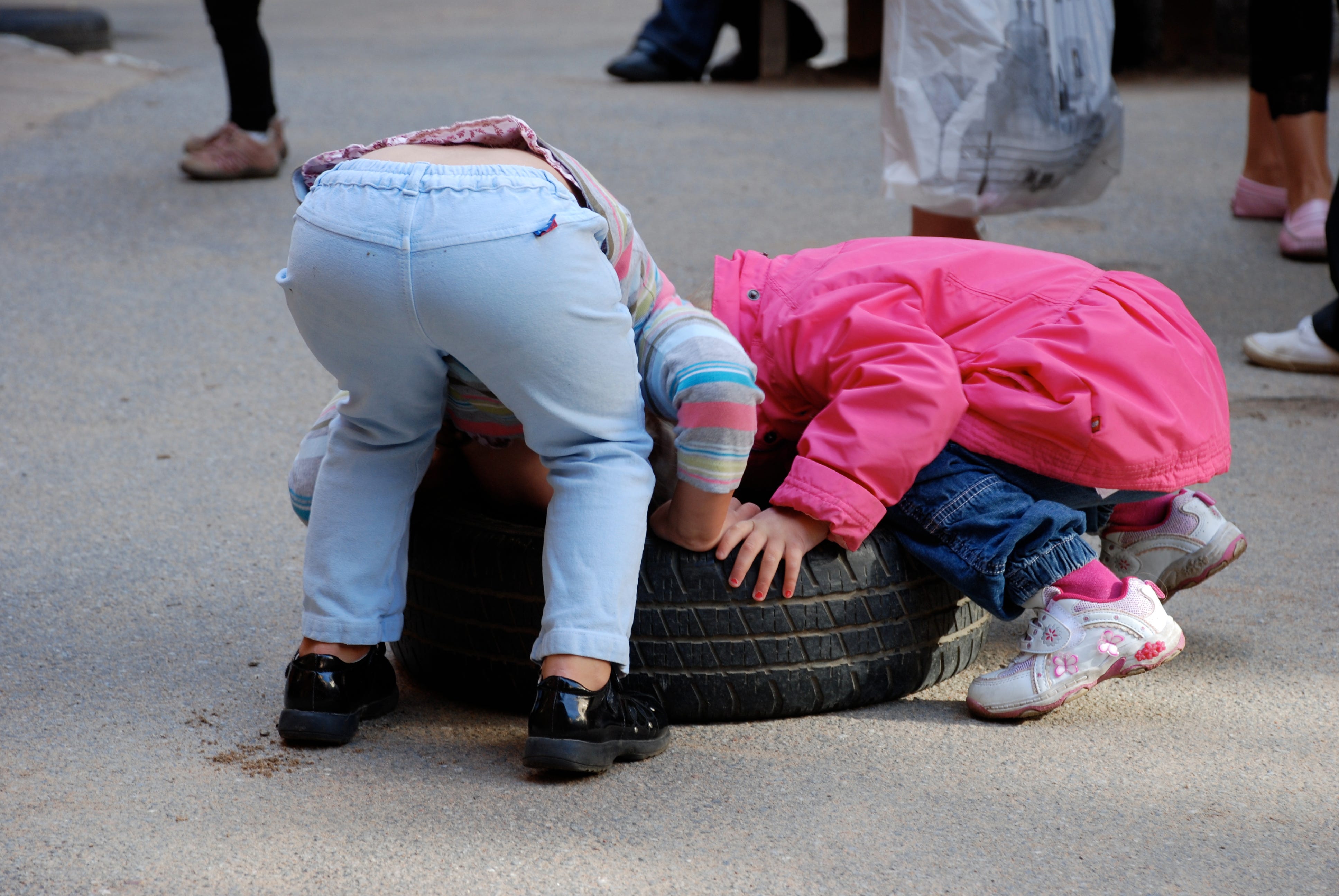
"Curiosity does not need to be installed in children."
So true. The human mind does not arrive to the world as a 'tabula rasa,' it is determined by the conatus (the force/will to exist) which is present in all things in nature. When the mind gains a grain of understanding the mind can be said to have pieced together two parts - a synapsis - of a whole (God or Nature). With each successive synapsis, the mind increases its conatus/curiosity - and without it, it withers like a plant that lacks the adequate conditions to flower. Such is the essence of the mind.